
Miracle Worker technicality in traffic case persuades judge, who escapes exhaustion of remedies challenge

Thursday, June 4, 2026 — A judge is dismissing a traffic prosecution against a well-known free market user of the road in Lawrence County, Tenn.,
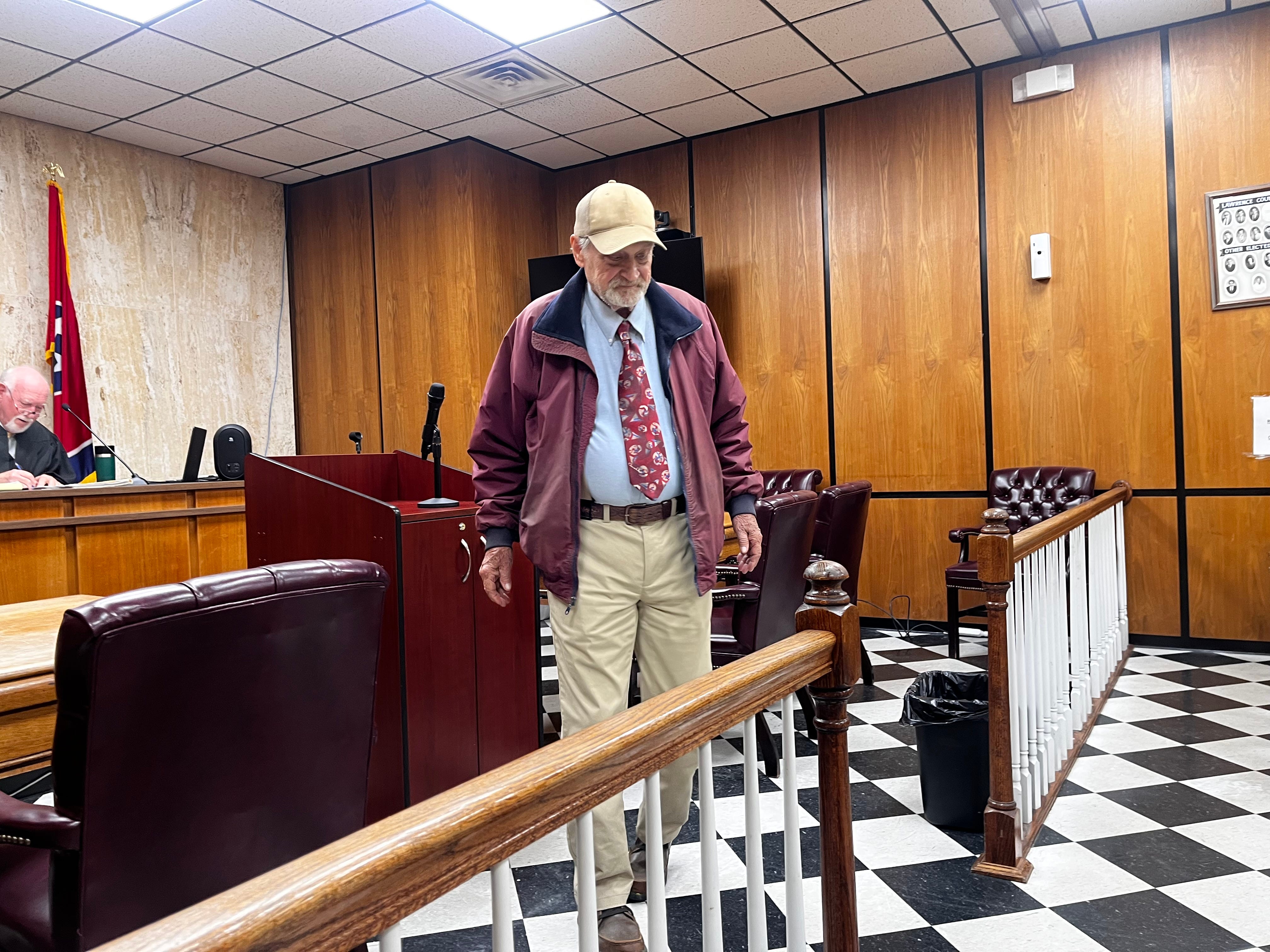
Arthur J. Hirsch says Mike Harris, general sessions court judge, has him wait for nearly three hours as he goes through the long docket today in Lawrenceburg.
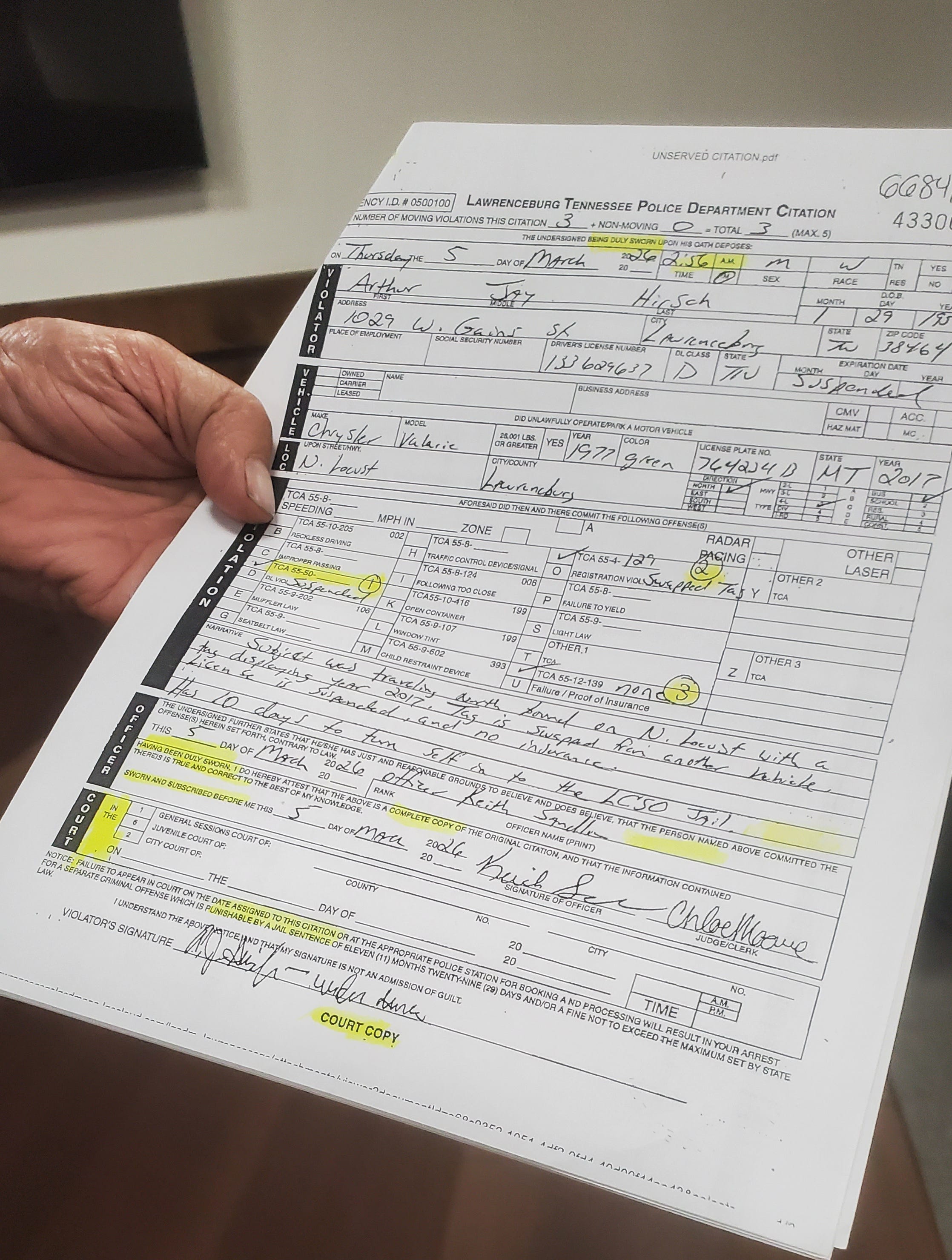
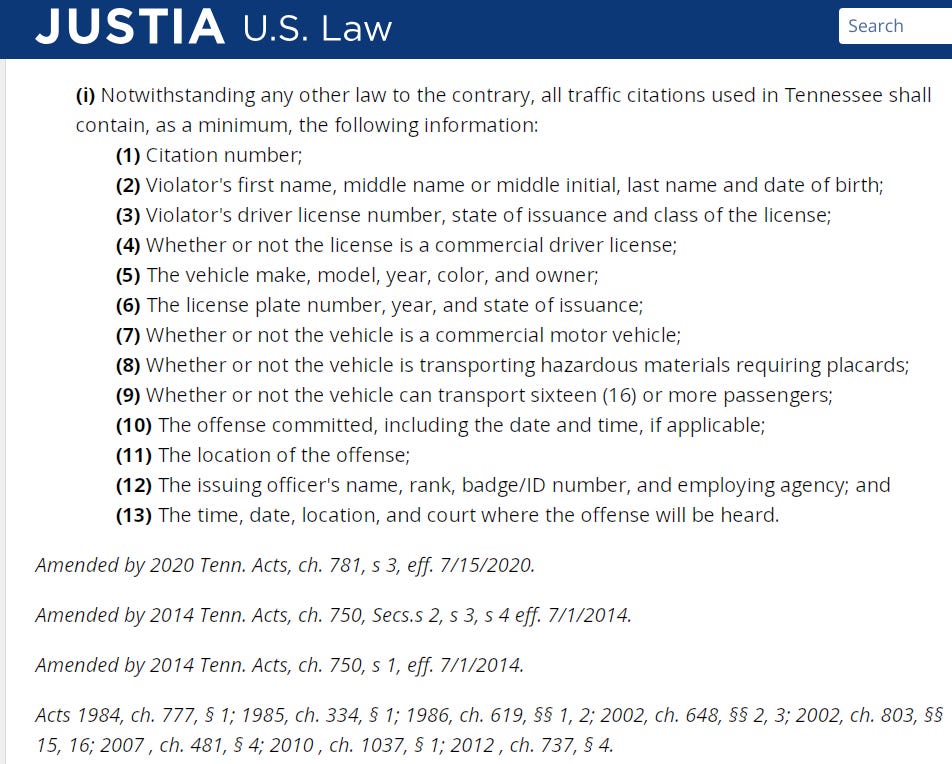
The traffic prosecution under criminal auspices is dismissed because the citation fails to provide the minimum requirements under the statute at T.C.A. § 55-10-207 namely, that the charging instrument declare a court, the date and the time at which they accused is to make appearance.
“Mr. Hirsch, I was wrong and you are right,” says Judge Harris, according to Mr. Hirsch.
Mr. Hirsch says that the judge declared he will be informing local police about the requirement that criminal citations fully inform the accused of pending hearing particulars.
“The Lord is to be praised,“ Mr. Hirsch says, citing paragraph 13.

Miracle Worker interrupted
The court was “absolutely packed, wall to wall,“ Mr. Hirsch says. “And I thought, how in the world is he going to get to me at 10 o’clock,” Mr. Hirsch added. He had been told to show up at 10 a.m. and stood before the court at about 1 p.m.
Mr. Hirsch stands at the microphone and begins making the case for dismissal because the officer has failed to make appearance to make the state’s case and provide the state’s evidence. The judge interrupts him.
“He said, ‘I’ve been looking at your paperwork. I’ve been talking to other judges,’ and he says, ‘I have to admit that I am wrong and you are right.’”
“To have the time, date and place of court at the bottom of the citation,” Mr. Hirsch says. “Every citation in the state of Tennessee. That’s [T.C.A. §] 55-10-207. You have to. That’s at a minimum. It was missing.”
He says the judge could’ve dismiss the case on a number of grounds, including Mr. Hirsch’s claim that the affidavit was falsified in felony under clerk administration.
“There were so many issues, but he chose that one, ” Mr. Hirsch says.
Judge Harris’ decision to dismiss the traffic charges could have been based on Mr. Hirsch’s motion to dismiss on grounds that the state had failed to exhaust its administrative remedies by did not pursue its allegations in the department of safety, set up to regulate traffic.
Judge Harris said at a hearing earlier that if this analysis were true, it would bring government enforcement of traffic to a standstill. That powerful contention, evidently, is best left alone if other grounds avail themselves for dismissal.
Princely warfare against principalities & powers
David runs a personal nonprofit fighting and mercy ministry. He thanks you for checks sent directly to c/o 10520 Brickhill Lane, Soddy-Daisy, TN 37379. Also at GiveSendGo at the link above.
They will do whatever it takes avoid answering the questions they can't answer.
I just filed suit against a corrupt judge forcing his recusal, and then placed into the record all the "training material" for judges explaining how they can deprive people of their rights and not leave a record of what they did while barring their victim from making the record at the same time.
I have heard so many people complain about a judge failing to recuse and continuing in their crimes that I feel that is a small victory in itself.
The training materials prove a systemic policy that certain "sovereign citizen" types are to be treated as rightless bags of meat. That spurs a federal claim to be filed in a week or so when I get to it.
From @littlebulewbirdie:@littlebulewbirdie:
You should research: The Eleventh Amendment restricts private citizens from suing states for damages in federal court, but there are critical ways to seek justice and compensation for constitutional and contractual violations.The Federal Tucker Act waives the federal government's sovereign immunity to allow individuals and businesses to sue the United States for money damages in the U.S. Court of Federal Claims or certain District Courts, specifically for breaches of contract.Suing State Governments & Officers
Ex Parte Young: Private plaintiffs can sue state officers (rather than the state itself) in federal court. This allows you to seek prospective injunctive relief to stop ongoing constitutional violations.Local Governments: The Eleventh Amendment does not protect counties, cities, or school boards. You can sue these municipal entities in federal court.Federal Discovery: Even when sovereign immunity blocks a direct lawsuit against a state, you can often still obtain federal discovery in related civil rights claims against state employees.
The Tucker Act Explained
Contract Lawsuits: If the federal government fails to pay for goods or services, the Tucker Act waives sovereign immunity, allowing you to sue for breach of an express or implied contract.
Damages: This act applies to claims for money damages rather than demands for specific performance (like returning property or stopping an agency).Jurisdiction: Claims over $10,000 must generally be filed in the U.S. Court of Federal Claims.
Constitutional and Federal ViolationsUnited States Lawsuits: The United States can initiate a lawsuit against entities, including states, to vindicate constitutional rights or enforce federal statutes.
Fifth Amendment Takings: Under the Tucker Act, you can sue the federal government for just compensation if your private property is taken for public use.If you are dealing with a specific situation, tell me:Is this a contract dispute or a constitutional violation?
Are you suing a state entity or the federal government?